ISHN - March 2026
By: Shawn M. Galloway
Printable Version
A practical way to reduce high-consequence events without relying on luck, warnings, or slogans.
High-risk industries often do two things simultaneously: they increase complexity and hire quickly. This combination isn't inherently bad; it reflects how organizations grow. However, it alters your exposure profile in ways many leaders may not fully consider. When an operation brings in less-experienced workers, it can unintentionally shift more high-consequence decisions to individuals who haven't yet developed the judgment and patterns that come with experience. Here is a simple question worth asking: Are we assigning tasks based on availability or on the potential impact of errors?
The Idea: Severity- and Frequency-Weighted Task Assignment
Most organizations already do some version of this informally. The veteran gets the hardest job. The new person gets the repetitive one. The problem is that the approach is rarely explicit, consistent, or designed to build competence and capacity at speed.
- A more deliberate version is recommended.
- Analyze tasks and exposures by two dimensions: severity potential (what is the worst credible outcome?) and frequency potential (how often is the exposure present?).
- Then decide who performs, who supports, and who verifies the critical steps.
- When the highest severity potential cannot be assigned to the most capable person, add a layer: supervision, coaching, verification, or, ideally, engineered controls. Do not accept a gap just because the schedule is tight.
Why Brain Science Belongs in an Operational Conversation
Talk about competence and experience long enough, and someone usually says, "It is common sense." That is true, but incomplete. Neuroscience helps explain why risk tolerance and decision quality can vary by age, fatigue, and stress, even when intent is good and training has been delivered.
For example, the National Institute of Mental Health notes that the brain continues to mature into the mid-to-late 20s and that the prefrontal cortex, which is responsible for planning, prioritizing, and decision-making, is among the last areas to mature.1 Cleveland Clinic similarly states that the prefrontal cortex is the last part of the brain to complete myelination, which helps signals travel faster and more reliably, improving coordination, processing speed, and learning, usually by the mid-20s.2
This does not mean younger adults cannot perform high-risk work. They do every day. It means that work design and supervision matter more than most organizations admit. When the job demands rapid inhibition, impulse control, and "stop and think" decisions under time pressure, you are relying heavily on executive function.
Developmental neuroscience also supports the idea that reward seeking and cognitive control do not mature on the same timeline. Steinberg’s dual systems model proposes that heightened reward sensitivity can precede the full maturation of self-control, creating a window of greater vulnerability to risk-taking in emotionally stimulating contexts.3
It is also worth avoiding simplistic claims like "older equals safer" or "younger equals reckless." A meta-analysis of risky choice across age groups found that age differences in risk-taking vary by context and task design, not just chronological age.4 That nuance matters in the workplace: the goal is not to stereotype, it is to design development, controls, and capacity for the realities of human decision-making, which includes error.
Add the realities of high-hazard work, and the plot thickens. Stress can quickly impair cortical function, undermining working memory, attention, inhibition, and cognitive flexibility.5 Chronic stress can also bias people toward more automated, habitual responding, which is exactly the condition that makes shortcuts feel "normal."6
Fatigue and sleep deprivation further impair decision quality. In a laboratory study, a single night of total sleep deprivation shifted people’s economic decision-making toward pursuing gains rather than avoiding losses, with changes observed in brain activation patterns during decision-making.7 In simple terms: a tired brain may assess risk differently, even when the person believes they are making the same types of choices as always.
Young Workers Are Not the Problem. Unsupervised Exposure Is
If you are tempted to interpret the science above as an argument to "keep young people off the dangerous stuff," stop. That approach is neither practical nor developmental.
NIOSH reports that young workers have high rates of job-related injuries and notes that limited work experience and a lack of safety training contribute to these injuries.8 Its injury rate charts show that, in 2020, workers aged 18 to 24 had the highest rate of emergency department-treated work-related injuries among all age groups, at 2.3 injuries per 100 full-time equivalents.9 The data do not indicate that young workers are careless. Instead, they show that young workers are exposed to risks, often without sufficient support.
The real lever is supervised exposure. Skill develops when someone performs a task, receives immediate feedback, and repeats it under different conditions until correct decisions become more automatic than the incorrect ones. You don't need a perfect brain science model or to be a neurologist to act on this. You need a better way to assign, supervise, and develop people doing work with high severity potential.
A Practical Operating Model: Five Rules to Try
- Build a "critical task matrix". List the tasks that carry your highest severity potential. Define the credible worst-case outcome, not the probable one. Then list the specific decision points that separate routine execution from catastrophic error.
- Define tiers by verified capability, not age. Age may correlate with experience, but it is not a substitute for competence. Create a simple capability standard for each critical task: training completed, supervised repetitions completed, demonstrated proficiency, and recent practice.
- Pair by intent. For the highest severity tasks, decide in advance how you will pair people: a lead performer and a verifier, or a performer and a coach. Rotate pairings to build bench strength, but do not rotate so fast that no one builds mastery.
- Convert supervision into coaching, not policing. If supervision only shows up to catch mistakes, people will hide mistakes. Coaching assumes the person is capable of improvement and focuses on seeing risk cues, anticipating drift, and making the "stop" decision earlier.
- Measure developmental leading indicators. Track coaching hours on critical tasks, the number of supervised exposures completed, and the quality of pre-job brief conversations. Also track a critical lagging indicator: how often high-severity controls were bypassed and why.
Common Pitfalls and How to Avoid Them
Bottlenecks. If only a few people are "allowed" to do high-severity tasks, your system becomes fragile. Use the model to build capability depth, not to create hero dependency.
Resentment. If experienced workers feel punished with the hardest assignments and no relief, the model collapses. Rotate responsibilities and recognize coaching as production, not as overhead.
Age discrimination risk. Make capability standards transparent and job-related. Document criteria and decisions. The intent is to allocate risk based on competence and control, not to label people by age.
False confidence from repetition. Frequency is not mastery. Someone can repeat a task for months and still miss the critical cues. That is why supervision and verification should focus on decision points and risk cues, not on speed or volume.
The Choice in Front of Leaders
Organizations rarely "choose" to put less experienced people in high-stakes situations. They drift into this practice due to growth, attrition, turnover, contractor reliance, and schedule pressure. Risk-weighted work design is a method to prevent drifting. It turns task assignment, supervision, and development into intentional strategies instead of informal habits.
If you want fewer serious injuries and fatalities, stop treating staffing as an administrative decision. Treat it as a control. Decide which tasks require your highest competence and tightest coaching, then build a system that makes that the default.
References
- National Institute of Mental Health. (n.d.). The Teen Brain: 7 Things to Know. Retrieved February 5, 2026, from https://www.nimh.nih.gov/health/publications/the-teen-brain-7-things-to-know
- Cleveland Clinic. (n.d.). Prefrontal Cortex: What It Is, Function, Location & Damage. Retrieved February 5, 2026, from https://my.clevelandclinic.org/health/body/prefrontal-cortex
- Steinberg, L. (2010). A dual systems model of adolescent risk-taking. Developmental Psychobiology, 52(3), 216-224. https://doi.org/10.1002/dev.20445
- Mata, R., Josef, A. K., Samanez-Larkin, G. R., & Hertwig, R. (2011). Age differences in risky choice: a meta-analysis. Annals of the New York Academy of Sciences, 1235, 18-29. https://doi.org/10.1111/j.1749-6632.2011.06200.x
- Arnsten, A. F. T. (2009). Stress signalling pathways that impair prefrontal cortex structure and function. Nature Reviews Neuroscience, 10(6), 410-422. https://doi.org/10.1038/nrn2648
- Girotti, M., Adler, S. M., Bulin, S. E., Fucich, E. A., Paredes, D., & Morilak, D. A. (2018). Prefrontal cortex executive processes affected by stress in health and disease. Progress in Neuro-Psychopharmacology & Biological Psychiatry, 85, 161-179. https://doi.org/10.1016/j.pnpbp.2017.07.004
- Venkatraman, V., Huettel, S. A., Chuah, L. Y. M., Payne, J. W., & Chee, M. W. L. (2011). Sleep deprivation biases the neural mechanisms underlying economic preferences. The Journal of Neuroscience, 31(10), 3712-3718. https://doi.org/10.1523/JNEUROSCI.4407-10.2011
- Centers for Disease Control and Prevention, National Institute for Occupational Safety and Health (NIOSH). (2026, January 29). Young Worker Safety and Health. https://www.cdc.gov/niosh/young-workers/about/index.html
- Centers for Disease Control and Prevention, National Institute for Occupational Safety and Health (NIOSH). (2024, March 15). Young Worker Employment, Injuries and Illnesses Charts. https://www.cdc.gov/niosh/young-workers/charts/index.html
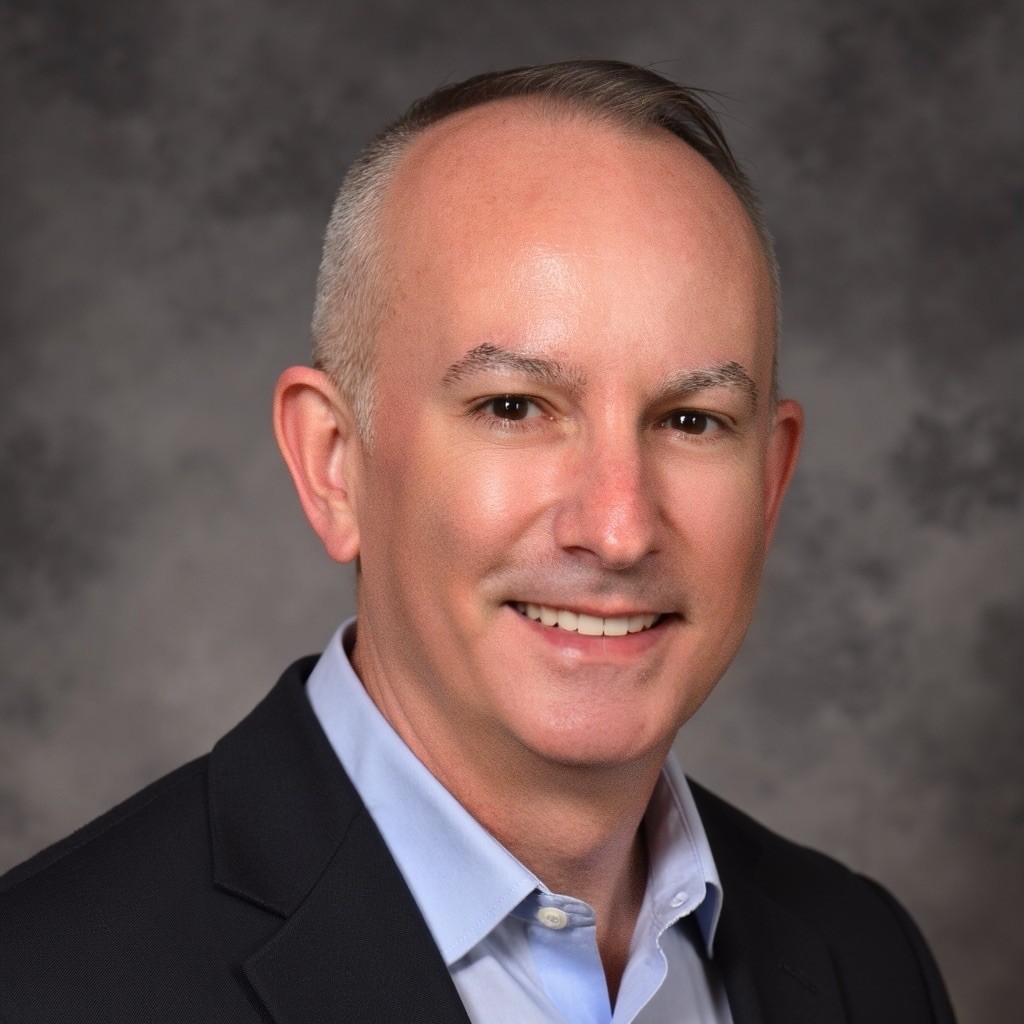
Shawn Galloway, CEO of ProAct Safety, is an expert in safety excellence. With almost thirty years of experience, he is a highly sought-after advisor, keynote speaker, and expert witness. Shawn has become a trusted partner to leading organizations across various industries worldwide. He ranks in the top 1% of the most prolific writers in his field, having authored over 500 articles and several bestselling books. He also launched the world's first safety podcast, Safety Culture Excellence©. As a recognized authority in safety, Shawn has received awards such as being named among the Top 50 People Who Most Influence EHS and a Top 10 Speaker, among others.
He is a regular guest on Bloomberg, Fox News, The Daily Mail, Dubai One, U.S. News & World Report, Sirius Business Radio, Wharton Business Daily, and leading safety magazines and podcasts. Shawn also serves as a member of the Harvard Business Review Advisory Council, Forbes Business Council, and Fast Company Executive Board, enabling his influence to shape safety thinking and strategy at the executive level.
